
About Warehouse Basics
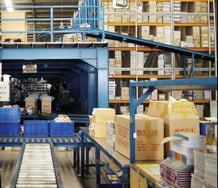
Warehouse Basics is a third-party logistics provider based in Atlanta, Georgia, and a Southeast regional hub for its customers. Its 20 full-time employees run 280,000 square feet of warehouse space, handling everything from full pallet in and out to LTL and small parcel, and it stores hazmat materials (corrosives and non-flammable gases) along with temperature-controlled goods.
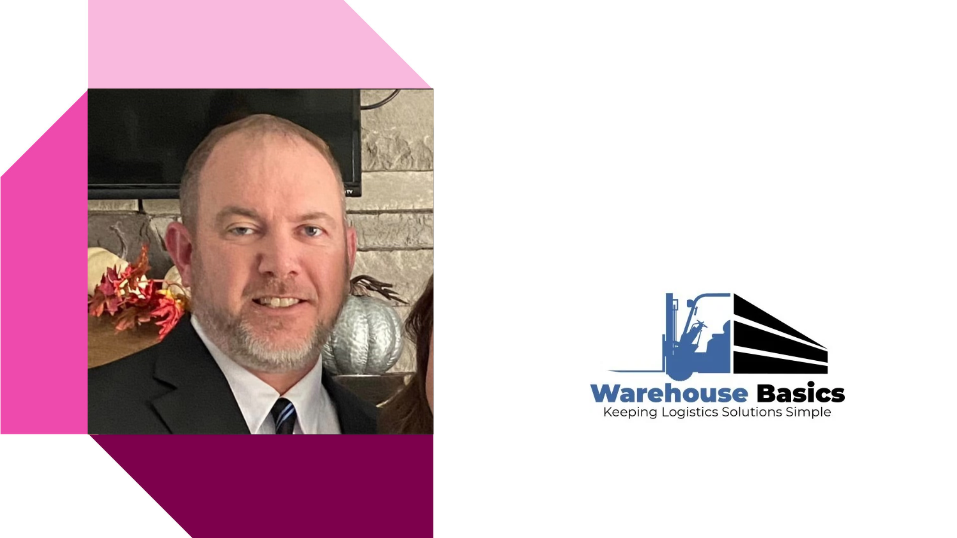
"A lot of our competitors are still using systems that are kind of antiquated and the customers can't get visibility," Watkins says. "When they hear that visibility they're completely amazed."
Ken Watkins
Co-Owner, Warehouse Basics
Highlights
Challenges
- Hazmat storage rules (what can sit on top of, under, or next to what) lived in people's heads.
- Smaller, homegrown systems promised what a 3PL needed but never fully delivered.
- Billing was spread across Excel spreadsheets, QuickBooks, and several formats.
Solution
- 3PL Warehouse Manager location priorities and directed put away keep hazmat storage rules enforced by the system.
- Built-in billing brought every billing format into one platform from day one.
- Small Parcel Suite, SmartScan, and EDI/API integrations run daily order flow, with client visibility through the online portal.
Results
- Revenue has doubled since moving to Extensiv, while the labor force grew only 25%.
- Billing calculation and invoice creation take 45-50% less time.
- Zero hazmat storage errors or compliance issues in six years.
- 70% of clients have stayed with Warehouse Basics for three years or longer.
- Carrier tools like FedEx Ship Manager and UPS WorldShip are no longer needed in the warehouse.
Industry: Third-party logistics (warehousing & distribution, hazmat, temperature controlled)
Company size: 20 full-time employees; 280,000 sq ft
Challenge
Hazmat rules that can't depend on memory
Ken Watkins, co-owner of Warehouse Basics, is quick to point out that the 3PL business has always been bigger than ecommerce. His Atlanta operation handles full pallets, LTL, and small parcel for customers who use it as their Southeast hub. It also does something many 3PLs don't: it stores hazmat materials, specifically corrosives and non-flammable gases, plus a temperature-controlled room for goods that need to stay in range.
Hazmat raises the bar inside the building. "Different chemicals can't be stored on top of other chemicals," Watkins says. "There is a requirement of where they can be stored as far as what can be stored under them, what can be stored next to them." Those rules have to be written down, trained, and followed every time.
Before Extensiv, Warehouse Basics ran on smaller, homegrown systems. Watkins says they "always had the ideas and the desires to fulfill the needs that we were looking for," but "they never could execute completely." Billing was its own problem, scattered across "different formats, Excel spreadsheets, QuickBooks."
Solution
A system that backs up the SOPs
Six years ago, Warehouse Basics went looking for a new warehouse management system. The team interviewed three or four vendors with two priorities in mind: ongoing support and product development, and billing in the same system as the warehouse.
Extensiv covered both. "Extensiv was able to show us from the very beginning that they could support their customer needs, and that the billing manager was already created, integrated, and fully functional," Watkins says.
For hazmat, the team sets priorities on locations in 3PL Warehouse Manager so directed put away sends each product where the rules allow. "You can use Extensiv to prioritize those locations so that you don't have to always remember those rules," Watkins says. Warehouse Basics documents its SOPs and trains its people, then lets the system back up those processes "so that you avoid mistakes and errors."
On a normal day, the team works mostly in the order screen, the small parcel screen, and SmartScan. "All of our processes are built and flow through Extensiv," Watkins says.
Results
Twice the revenue without twice the team
The clearest measure of the last six years is growth that headcount didn't have to match. "Since we started using Extensiv, we have doubled our revenue while only increasing our labor force by 25%," Watkins says. With the system enforcing storage rules and handling billing, each person on the floor can carry more of the work.
Billing in half the time
Moving billing out of spreadsheets and QuickBooks and into the same system as the warehouse paid off in the back office. Warehouse Basics has cut the time it spends calculating charges and creating invoices by 45-50%.
Zero hazmat issues in six years
The location rules have held up where it matters most. Since setting up location priorities and directed put away in 3PL Warehouse Manager, Warehouse Basics has had zero hazmat storage errors or compliance issues.
Carrier tools out, integrations in
Small parcel has been one of the biggest recent gains. "We've been able to eliminate the outside use of FedEx.com or FedEx Ship Manager, UPS WorldShip," Watkins says. As customers come to trust the system, Warehouse Basics is moving more of them onto API connections for transportation, shipping, and receiving data.
Integration support that helps close business
EDI and API come up in nearly every sales conversation, and many prospects don't know what those terms mean. "They just want to push a button and everything just works seamlessly, which is great in concept, but that's not how technology really works," Watkins says. Support on the integration side changed what he can offer. "The support side has really opened up our opportunity to sell that to our customers as a way to communicate." Automated order entry also cuts order processing cost for his clients. "There is an upfront cost, but the overall savings over time is well worth it."
Visibility that surprises new clients
Many Warehouse Basics clients also work with other 3PLs across the country, and they often don't expect what they get here: online visibility through Extensiv, at no additional cost, that's simple to use. "A lot of our competitors are still using systems that are kind of antiquated and the customers can't get visibility," Watkins says. "When they hear that visibility they're completely amazed."
Flexibility to fit each customer
Watkins doesn't make customers change how they run. "We're not going to force our customers to follow our processes," he says. "Extensiv is very flexible in that we've been able to create different ways to meet our customer needs without changing their business."
Thirty years and still growing
Warehouse Basics has been in business for 30 years, and Watkins is proudest of its retention: 70% of its clients have been with the company for three years or longer. Some clients have grown with the company. Others have changed jobs and brought Warehouse Basics along to the new company. Six years in, he says the platform's "continued development side has only benefited us. It's given us more opportunity to explore different ways of running our business and providing solutions to our current and future customers."
Running a 3PL is hard. Let's make it easier.
Warehouse management software built for 3PLs, so your storage rules and your billing live in the same place.
-
You’ll read about:

Be the first to know
Subscribe to our newsletter